
What If the Food Isn't the Whole Problem?
An Entirely Different Perspective on Food Sensitivities, Allergies and Fragrance Reactions
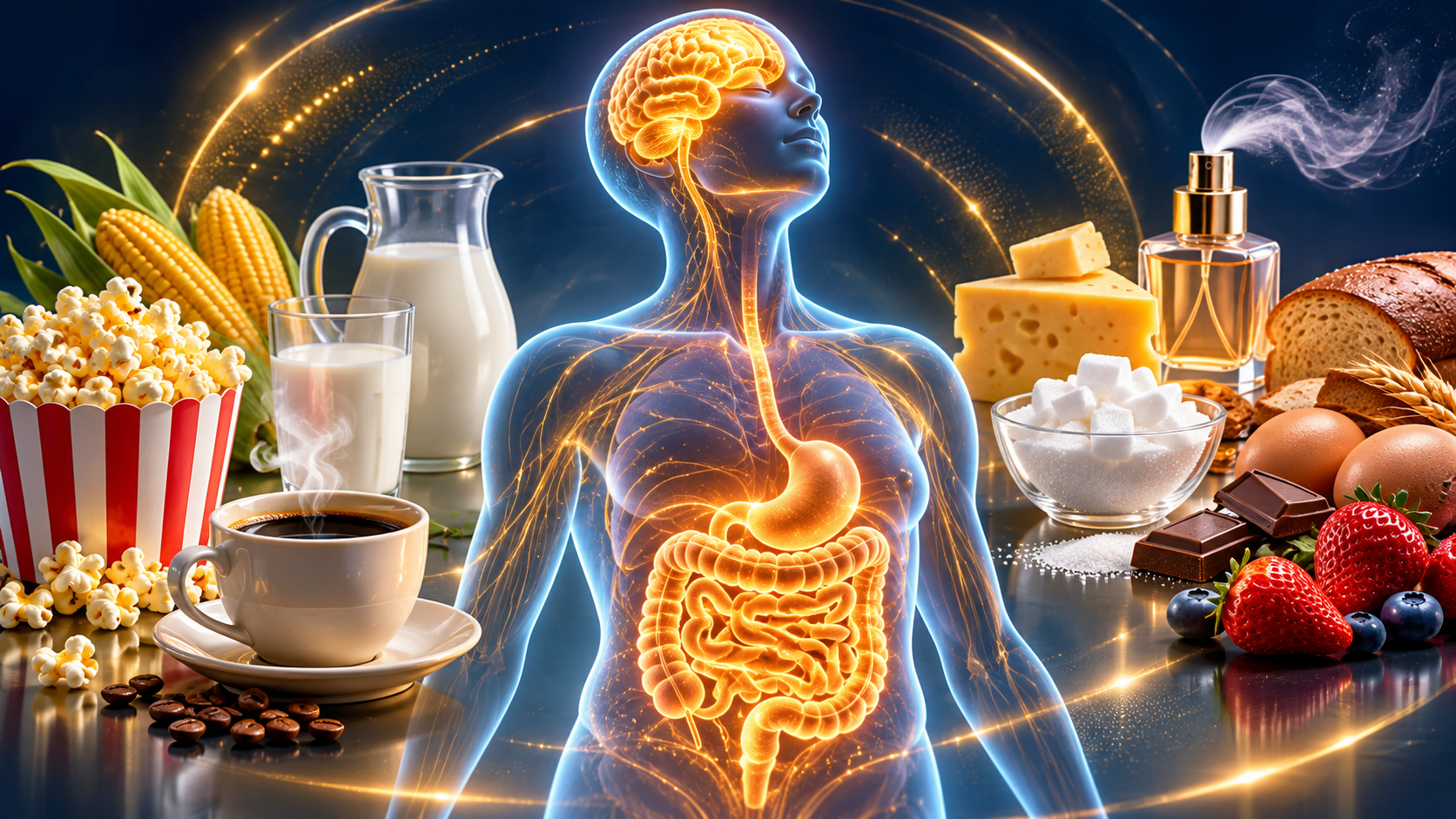
You are what you eat.
But could there be more to this familiar expression than we have ever considered?
Why can one person enjoy a cup of coffee, a glass of milk or a bowl of popcorn while another experiences debilitating symptoms?
Why do some people continue suffering despite eliminating numerous foods from their diets?
My clinical investigations have led me to explore the relationship between foods, microorganisms, the nervous system and the body's immune responses.
Through my Quantum Resonant Medicine examinations, I have observed patterns that have led me to investigate whether underlying infections may contribute to certain food and fragrance sensitivities.
Rather than focusing exclusively on what enters the body, I also investigate what may already be present within it.
The following patient experiences illustrate why I began asking these important questions.
Imagine vomiting more than ten times a day for years.
Imagine losing weight and living in constant fear of eating.
This was Kaylee's life.
Even the smell of popcorn could trigger vomiting, while exposure to corn could provoke severe allergic reactions requiring an EpiPen.
When Kaylee came to me, I wanted to understand why her body was reacting so severely to corn.
My Quantum Resonant Medicine examination revealed resonance findings that I associated with black mold in her stomach.
I prepared an individualized protocol using my frequency-imprinted formulas.
Following her care, Kaylee reported that her reactions to corn had disappeared.
After years of suffering, she described an extraordinary change in her life.
Her experience raises an important question:
Was there more to her suffering than the corn itself?
When Popcorn Became a Source of Fear
Watch Kaylee Tell Her Remarkable Story
Individual patient experience. Anyone with severe food allergies should maintain prescribed emergency precautions and consult their allergist before reintroducing allergens.
For nine months before coming to see me, this patient had eliminated dairy products from his diet in an effort to relieve his lupus rash.
Despite his dietary restrictions, the rash persisted.
Why?
During my Quantum Resonant Medicine examination, I observed resonance findings that I associated with bacteria in his skin and his body's reaction to dairy.
This led me to investigate whether the relationship between dairy and these microorganisms was contributing to his symptoms.
Rather than focusing exclusively on eliminating dairy, I developed an individualized protocol using my frequency-imprinted formulas.
Following his care, the rash disappeared, and he reported that he no longer experienced his previous reactions to dairy.
This experience illustrates why I look beyond dietary restrictions when investigating persistent symptoms.
Eliminating a food and understanding why the body reacts to it are two very different things.
Nine Months Without Dairy — Yet the Rash Remained
Watch His Remarkable Lupus Rash Testimonial
Could the Foods We Eat Influence Microorganisms Within Us?
Food provides nourishment and energy to the human body.
But our bodies are also home to trillions of microorganisms.
My clinical investigations extend beyond the nutritional and chemical properties of food to explore its frequency characteristics and potential interactions within the body.
For example, during my Quantum Resonant Medicine examinations, I have observed resonance patterns associated with:
Sugar and Candida in the bones, brain and urinary bladder.
Coffee and microorganisms in different regions of the body.
Dairy products and bacteria associated with persistent skin symptoms.
Corn and fungal resonance findings in the digestive system.
These observations have led me to investigate whether particular foods may influence the activity of microorganisms and contribute to an individual's symptoms.
My approach is to investigate these relationships individually rather than assume that everyone needs to avoid the same foods.
My goal is to better understand why the body reacts the way it does.
Can Simply Smelling Something Trigger Symptoms?
A person does not necessarily have to eat a particular food to experience symptoms associated with it.
Sometimes, simply smelling coffee, cinnamon, garlic, perfume or even an essential oil can trigger an uncomfortable response.
My Quantum Resonant Medicine examinations have revealed remarkably individualized resonance patterns associated with these exposures.
For example, my clinical observations have included:
The aroma of coffee and resonance findings associated with Epstein-Barr virus in the brain in patients experiencing migraines.
Food aromas and resonance findings associated with mold in the thyroid gland.
Fragrances and resonance patterns associated with Aspergillus fungus in specific tissues.
Essential oils and resonance responses associated with microorganisms in different regions of the body.
What fascinates me is that the same aroma can produce entirely different responses in different individuals.
Different person. Different microorganism. Different tissue. Different symptoms.
Even substances commonly regarded as beneficial, such as essential oils, can produce unexpected responses in certain individuals.
These clinical observations have led me to investigate potential relationships between sensory stimulation, microorganisms and the body's biological responses.
Rather than simply asking what someone is reacting to, I want to understand why.
That distinction is fundamental to my Quantum Resonant Medicine approach.
What if identifying the foods you react to is only the beginning of the investigation?
During my Quantum Resonant Medicine examinations, I explore three important questions:
What substance is associated with the patient's reaction?
Which specific regions of the brain and body exhibit a resonance response?
What microorganisms may be associated with that response?
Every individual presents a different biological picture.
Two people experiencing migraines after smelling coffee may exhibit entirely different resonance findings during their examinations.
This is why I develop individualized protocols using my frequency-imprinted formulas rather than a one-size-fits-all approach.
During subsequent examinations, I reassess these resonance responses and evaluate changes in the patient's reported symptoms.
My passion is to investigate the unanswered questions surrounding persistent illness and help people better understand their own health.
Life should be about enjoying experiences, sharing meals with loved ones and creating beautiful memories.
Looking Beyond Food Elimination
Identifying a food that triggers symptoms is not necessarily the same as understanding why your body reacts to it.
While food avoidance can be essential for safety, my clinical investigations are driven by a different question:
Why did your body develop this reaction in the first place?
My Quantum Resonant Medicine approach focuses on investigating potential underlying contributors to these reactions.
Through my individualized examinations, I explore the relationships between specific foods, microorganisms and different tissues throughout the brain and body.
I then develop personalized protocols using my frequency-imprinted formulas and reassess the patient's responses during subsequent examinations.
My goal is to address what I identify as potential underlying contributors rather than focus exclusively on avoiding foods.
As illustrated by the patient stories shared above, some of my patients have reported being able to enjoy foods again that they previously could not tolerate.
Imagine the joy of sharing a meal with your family, dining at your favorite restaurant or traveling without constantly worrying about food.
My passion is to investigate the root of the problem.
The ultimate goal is greater freedom, better health and an improved quality of life.
The Goal Is Not a Lifetime of Food Restrictions
Scientific Research: Microorganisms, Food Allergies and the Immune System
Scientific research continues to uncover important relationships between microorganisms, dietary substances and the immune system.
Researchers are investigating how microbial communities influence the body's ability to tolerate foods and how disruptions in these communities may contribute to allergic responses.
The following published scientific studies offer fascinating insights into these relationships.
Healthy Infants Harbor Intestinal Bacteria That Protect Against Food Allergy
Nature Medicine, 2019
Researchers demonstrated that intestinal bacteria transferred from healthy infants protected mice against allergic reactions to a cow's milk allergen.
Read the Published Research
Dietary and Microbial Determinants in Food Allergy
Immunity, 2020
This scientific review explores how diet, intestinal microorganisms and their metabolic byproducts influence immune regulation and food tolerance.
Read the Published Research
Context-Dependent Roles of the Gut Microbiome in Food Allergy Tolerance Versus Sensitization
Gut Microbes, 2025
Researchers examined how microorganisms can promote either food tolerance or allergic sensitization depending on the individual's biological and environmental circumstances.
Read the Published Research
Have you eliminated numerous foods from your diet but continue to experience persistent symptoms?
Are you still searching for answers?
My Quantum Resonant Medicine approach offers a different perspective on investigating the potential underlying contributors to your health challenges.
A Normal Test Doesn't Always Mean You're Healthy.
Perhaps it's time to start asking different questions.