
Could Your Eyeglasses Be an Overlooked Source of Biological Stress?
An Unexpected Discovery in My Clinical Investigations Into Persistent Illness
How My Investigation Began
During my postgraduate neurological studies at the Carrick Institute, I learned how different wavelengths of light entering the eyes influence neurological and biological functions.
This knowledge inspired me to investigate the relationship between eyewear and the individual resonance responses I observe in patients suffering from persistent health conditions.
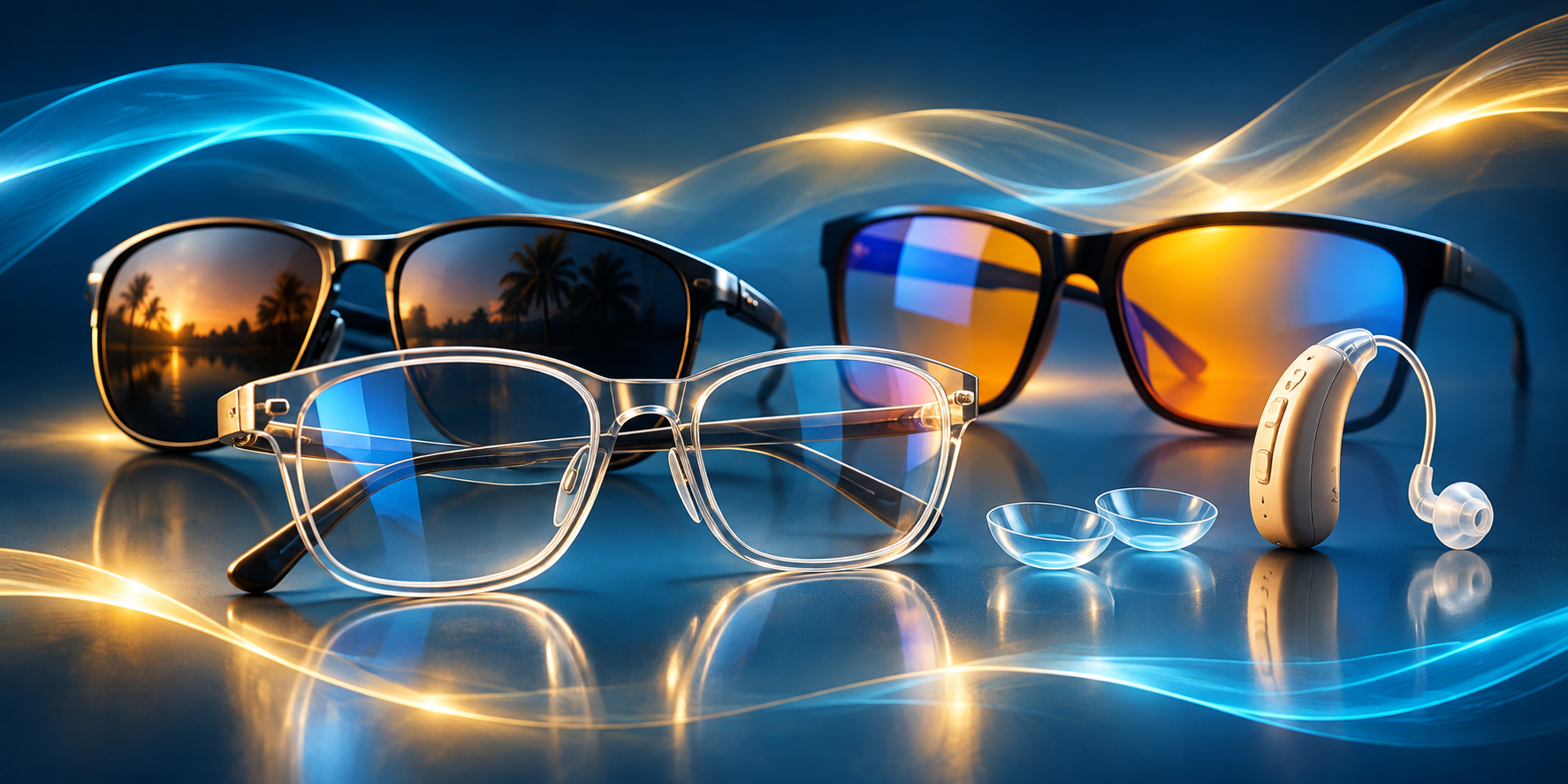
My investigations extend beyond prescription eyeglasses to include clear nonprescription lenses, sunglasses, blue-light-blocking glasses, contact lenses and hearing aids.
What particularly intrigued me was the specificity of the examination findings.
For example, a resonance pattern associated with Borrelia burgdorferi, the bacterium responsible for Lyme disease, and the cerebrospinal fluid (CSF), is very different from a pattern associated with Candida and the lymphatic system.
My Quantum Resonant Medicine examination explores these individual patterns and their possible relationship to a patient's symptoms.
Different Lenses, Different Resonance Findings
One of the most fascinating aspects of my clinical investigations is the difference in resonance findings when the same patient wears different types of lenses.
The frame material does not appear to determine these responses.
During my examinations, I investigate specific resonance patterns associated with microorganisms and anatomical locations, including:
Borrelia burgdorferi (Lyme disease) and cerebrospinal fluid (CSF).
Mold and the lymphatic system.
Candida and the intestinal tract.
Epstein-Barr virus (EBV) and the adrenal glands.
Parasites and the stomach.
Parasites and the liver.
When the same patient switches from clear prescription lenses to nonprescription sunglasses, I may observe an entirely different set of resonance findings.
Blue-light-blocking glasses can also produce distinct examination responses.
My investigations explore whether these patterns have a relationship to the patient's persistent symptoms, including skin rashes, bladder discomfort, abdominal pain and neurological complaints.
Each patient presents a unique combination of findings, which is why my Quantum Resonant Medicine protocols are individualized.
When Eyeglasses and Cellphone Exposure Are Combined
My clinical investigations became even more intriguing when I began examining patients wearing eyeglasses while using a cellphone.
During these examinations, I have observed additional resonance patterns that differ from those identified when the patient wears eyeglasses alone.
For example, my examination may identify a resonance pattern associated with mold and the lymphatic system while a patient wears clear lenses.
When cellphone exposure is introduced, additional patterns may emerge involving entirely different microorganisms and anatomical locations, such as Epstein-Barr virus and the adrenal glands or parasites and the liver.
I have also observed that removing the eyeglasses does not necessarily eliminate the original resonance response.
These individualized examination findings are why I investigate each exposure separately and in combination.
My observations involving eyewear
Beyond Eyeglasses: Contact Lenses and Hearing Aids
My clinical investigations extend beyond conventional eyeglasses.
When examining patients wearing contact lenses, I have observed individualized resonance responses despite the absence of eyeglass frames.
I have also observed distinct resonance patterns in patients wearing hearing aids.
My examination investigates patterns associated with specific microorganisms and anatomical locations throughout the central nervous system, glands, organs and lymphatic system.
These findings have encouraged me to expand my investigations into everyday exposures that patients might never have considered relevant to their persistent symptoms.
My objective is not to have patients discontinue wearing their glasses, contact lenses or hearing aids, but to investigate their individual examination responses and develop customized protocols accordingly.
These resonance observations do not independently establish the presence of an infection or demonstrate that these devices cause infections.
Peeling Back the Layers of an Onion
The resonance responses I observe involving eyeglasses and contact lenses differ from those I associate with electromagnetic field exposure.
I customize frequency-imprinted formulas according to the specific microorganism and anatomical location associated with each patient's resonance findings.
During subsequent examinations, I reassess the patient while wearing the same eyeglasses.
I have observed that the original resonance responses are often no longer detectable following the customized protocol.
Occasionally, a second layer of resonance findings becomes apparent, prompting me to develop another customized protocol.
I refer to this process as peeling back the layers of an onion.
This is why individualized examinations and follow-up assessments are such integral components of my Quantum Resonant Medicine approach.
The Science of Light and Neurological Function
The eyes serve a greater biological purpose than vision alone.
Specialized light-sensitive cells within the retina communicate with areas of the brain involved in regulating sleep, circadian rhythms, alertness and hormone secretion.
Different wavelengths of light can influence these biological responses.
My postgraduate neurological studies introduced me to these fascinating relationships and inspired me to explore additional questions involving optical lenses and individual resonance responses.
The following scientific publications provide valuable background on the relationship between light, the eyes and human physiology.
1. George C. Brainard et al. — Journal of Neuroscience (2001)
Research into how different wavelengths of light influence melatonin secretion in humans.
Read the scientific publication
2. David M. Berson et al. — Science (2002)
Research identifying specialized retinal cells that communicate light information to the brain's biological clock.
Read the scientific publication
3. Samer Hattar et al. — Science (2002)
Research investigating melanopsin-containing retinal cells and their connections to neurological centers.
Discover more about my clinical investigations, electromagnetic field exposure and my individualized approach to persistent health conditions.
Explore these additional pages:
Still Searching for Answers to Your Persistent Symptoms?
Discover a personalized approach to investigating your persistent health concerns through Dr. Lonnie Meisel's Quantum Resonant Medicine examination.